
How AI Is Changing Search
Search used to work in a simple pipeline: crawl pages, index them, rank them, and show a list of results.
That model is disappearing.
Modern AI systems such as ChatGPT, Perplexity AI, and Google Gemini don’t just retrieve pages. They read, interpret, and synthesize information from multiple sources to generate answers. Instead of ranking a list of links, these systems produce a response and cite sources they trust. That shift changes the goal of SEO.
You are no longer optimizing only to rank pages.
You are optimizing so AI systems understand your brand and choose to reference it.
Two optimization approaches are emerging from this shift:
- LLMO (Large Language Model Optimization) – optimizing content so AI models can understand and cite it.
- GEO (Generative Engine Optimization) – optimizing brand presence across the web so generative engines recognize and recommend it.
Together they form the foundation of AI-driven search visibility. Instead of ranking a list of links, AI systems generate answers and cite sources they trust. This is where AI search visibility becomes critical for brands.
What Is LLMO (Large Language Model Optimization)?

LLMO is the practice of structuring content so large language models can interpret, summarize, and cite it in generated answers.
Traditional SEO optimized for ranking algorithms.
LLMO optimizes for AI comprehension and extractability.
AI models prefer content that is:
- structured
- clearly defined
- contextually relevant
- easy to summarize
For example, a long narrative paragraph is harder for AI to extract than a clear framework or definition block.
Example
Poor structure:
AI SEO is important for businesses because search is changing and AI engines interpret content differently.
Better LLMO structure:
AI search visibility is the ability of a brand to be cited inside AI-generated answers.
Framework:
- Entity recognition
- Topical authority
- Structured extractable content
- External authority signals
AI models are far more likely to reuse the second version.
What Is GEO (Generative Engine Optimization)?

GEO focuses on how a brand appears across the broader information ecosystem that AI models learn from. Generative engines rely on a wide range of sources:
- articles
- documentation
- forums
- media mentions
- structured knowledge bases
If your brand appears consistently in these sources, the AI model builds entity recognition and topical associations.
Key GEO signals include:
- brand mentions in authoritative sites
- consistent entity descriptions
- presence in structured knowledge sources
- topical authority content clusters
In other words:
LLMO optimizes the content.
GEO optimizes the brand entity.
You need both.
The AI-Optimized SEO Funnel
AI search changes the classic SEO funnel. Instead of ranking → click → conversion, AI introduces a new path.
1. Discovery: AI Indexing and Entity Recognition
AI systems first need to recognize your brand as a meaningful entity.
This happens when your brand appears across multiple trusted sources with consistent descriptions. Key signals like: schema markup, brand entity consistency, topical content clusters, external mentions. Without this step, AI may not even know your brand exists.
2. Engagement: AI-Readable Content
Once discovered, AI evaluates whether your content is useful enough to extract information from.
High-performing AI-friendly content typically includes: clear definitions, numbered frameworks, question-based headings, FAQ sections and structured explanations. These formats allow AI models to summarize your content confidently.
3. Recommendation: AI Citation
The final stage is where AI decides which sources to mention in a response.
This is influenced by:
- topical authority
- trusted mentions
- clarity of explanations
- content structure
When these signals align, AI engines may cite your brand directly in generated answers.
Why Businesses Need AI SEO Now
The shift toward AI search is accelerating.
Millions of users now ask questions directly inside AI assistants instead of running traditional searches. Platforms like ChatGPT and Perplexity AI are already influencing how people discover products, services, and information. If your brand does not appear in these answers, you lose visibility before the user ever visits a search engine.
This creates a new marketing reality:
The brands cited by AI get discovered.
The brands ignored by AI remain invisible.
What Makes Content Trustworthy for AI Systems?
AI models rely heavily on signals of credibility. Content that is more likely to be cited typically includes:
Clear definitions
AI models frequently pull short definitions when answering questions.
Structured frameworks
Step-by-step explanations are easier to summarize than narrative text.
Original insights
Unique perspectives, case studies, and examples increase credibility.
Consistent entity signals
When a brand is described consistently across sources, AI models gain confidence referencing it.
How to Prepare Your SEO Strategy for AI Search
Future-proof SEO requires expanding beyond traditional ranking strategies.
Businesses should focus on three core areas.
1. Build topical authority
Instead of publishing many shallow articles, focus on deep topic clusters.
Example cluster:
- What is AI search visibility
- How AI models choose sources
- Tools for AI visibility
- Case studies and examples
This depth strengthens topical association.
2. Structure content for AI extraction
Every article should include:
- clear headings
- concise definitions
- frameworks
- FAQ sections
These elements improve citation probability.
3. Strengthen brand entity signals
Ensure your brand appears consistently across:
- your website
- social profiles
- directories
- industry publications
The more context AI models have about your brand, the more confidently they can recommend it.
The Real Goal of AI SEO
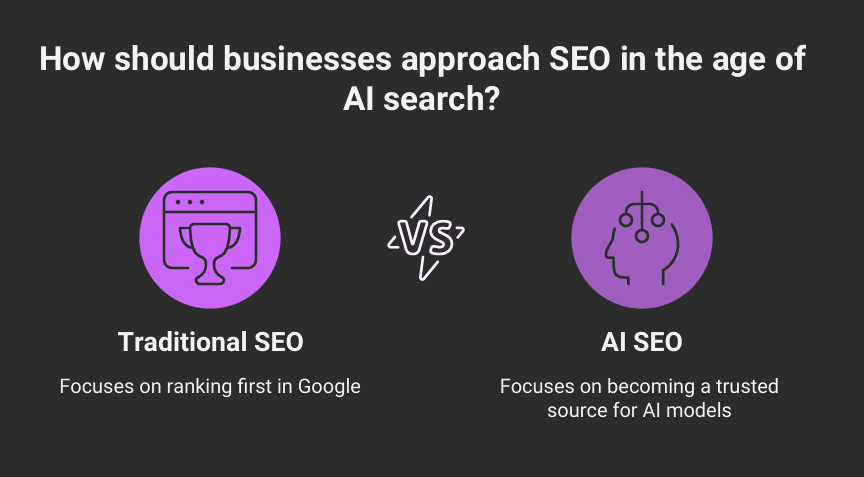
Traditional SEO optimized for rankings.
AI search optimization focuses on recommendations.
That difference changes the objective:
Instead of asking:
“How do I rank first in Google?”
Businesses now need to ask:
“How do I become a trusted source AI models reference?”
The answer lies in combining LLMO content optimization with GEO brand visibility strategies. AI search is changing how businesses get discovered. Ranking pages is no longer the only goal, brands must be understood and trusted by AI systems to be recommended in answers.
If you want a step-by-step framework for doing this, read our complete guide on how to improve brand visibility in AI search engines, where I break down the exact strategies businesses can use to appear in AI-generated answers.
Frequently Asked Question
What is the difference between LLMO and GEO?
LLMO focuses on optimizing content so large language models can understand and extract information from it. GEO focuses on optimizing a brand’s presence across the web so generative engines recognize it as an authoritative entity.
Can smaller brands compete in AI search?
Yes. AI models prioritize clarity, topical authority, and structured information more than brand size. Smaller brands with focused expertise can often be cited alongside larger companies.
Does traditional SEO still matter?
Yes. Strong technical SEO, crawlability, and link signals remain the foundation. Without them, AI systems may struggle to discover or trust your content.
How long does it take to appear in AI answers?
Results vary depending on authority and topic competition. Some brands begin appearing in AI responses within weeks once strong entity signals, structured content, and authoritative mentions are established.
Leave a Reply